Shipments throughout the EU.
When you talk about giant autoflowering strains, you have to talk about Magnum Auto by Buddha Seeds. Over the years, this strain has become one of the most recognized varieties by growers worldwide thanks to its enormous size, speed, and spectacular yield.
While many varieties come and go, Magnum Auto continues to be a favorite for both outdoor and indoor cultivation. Its ability to deliver XXL harvests in a short time has made it a landmark in the Buddha Seeds autoflowering catalog.
The key to Magnum Auto’s success lies in the balance between production, vigor, and ease of cultivation. Many growers look for an autoflowering plant capable of developing like a photoperiod, and that’s precisely where Magnum excels.
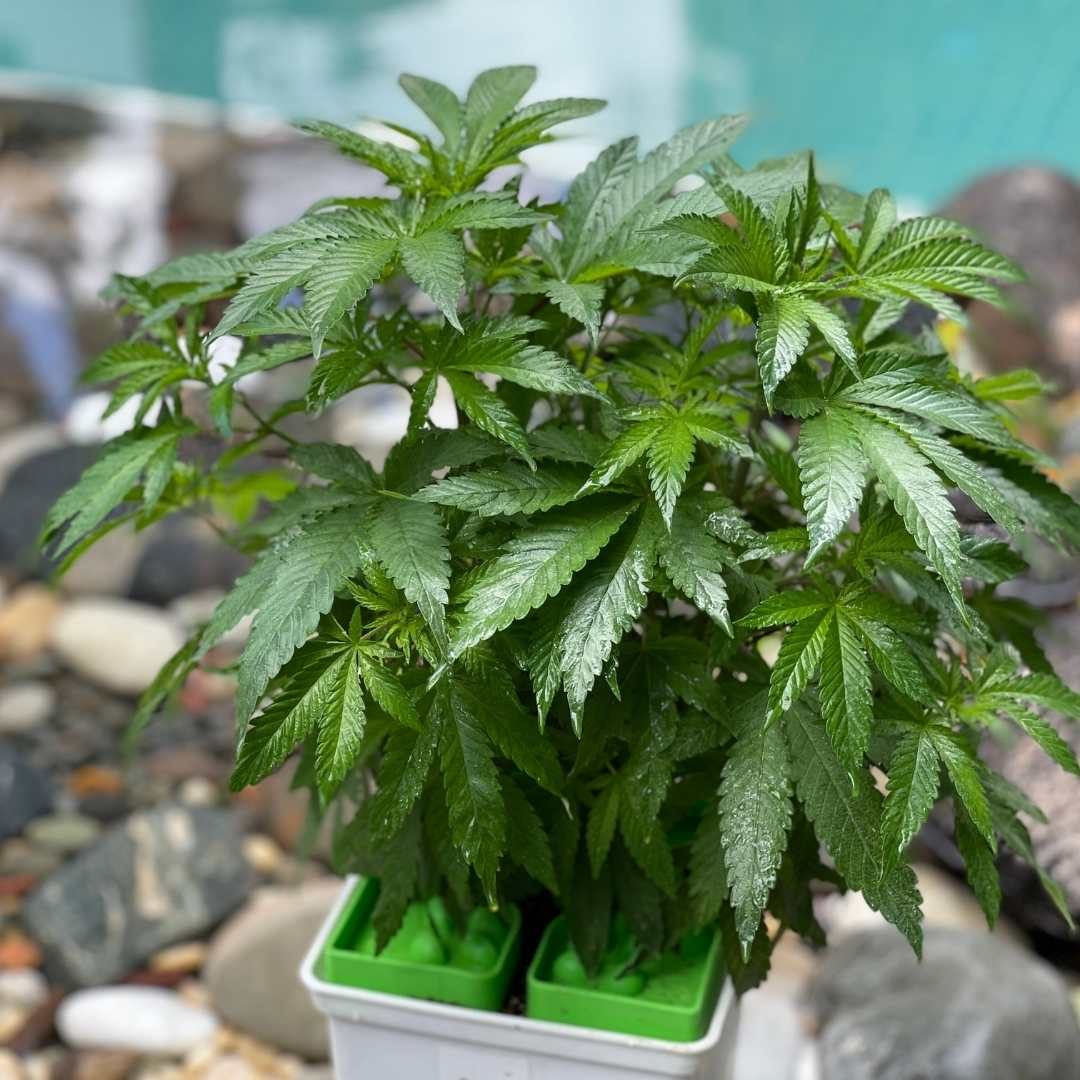
From its first weeks, it exhibits very vigorous growth, with a robust structure and a great capacity to develop productive lateral branches. This allows for truly large plants compared to other conventional autoflowering strains. In outdoor cultivation, Magnum Auto can easily reach between 70 and 150 cm in height under normal conditions. In particularly favorable climates and using large volumes of substrate, some growers have achieved even larger specimens.
Furthermore, its genetic stability has led thousands of growers to consider it a safe bet season after season.
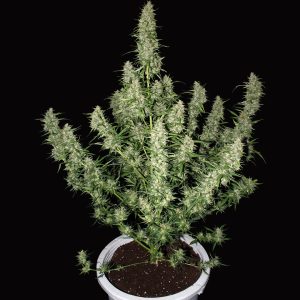
One of the areas where Magnum Auto from Buddha Seeds truly shines is outdoors. With adequate sunlight and root space, this variety can reach surprising sizes for an autoflowering strain.
Many growers use large pots or plant directly in the ground to maximize Magnum’s outdoor potential. With sufficient sunlight and balanced nutrition, this autoflowering plant develops into tall, bushy plants with a yield far exceeding the average for the autoflowering market.
In warm, sunny climates, Magnum Auto can become a true production machine, offering abundant harvests in very short cycles. Outdoors, Magnum Auto can yield between 60 and 250 grams per plant.
Use large pots from the start.
Avoid unnecessary transplanting.
Ensure plenty of direct sunlight.
Maintain consistent watering without overwatering. Boost the vegetative phase with good nutrition.
The result is usually a plant with a large visual volume and excellent final yield.
Growing Magnum Auto from Buddha Seeds indoors is also surprising for its productive capacity. Under modern LED lighting and controlled parameters, this strain can develop very uniform and highly productive plants. Indoor yields can range from 450 to 550 g/m².
Many indoor growers especially value:
its speed,
its initial vigor,
and the ease with which it quickly fills grow tents.
Thanks to its open and well-branched structure, Magnum Auto makes excellent use of artificial light, allowing for a homogeneous distribution of flowers throughout the plant. Furthermore, it responds particularly well to SOG setups and cultivation methods optimized for maximum efficiency.
When growers search for information on Magnum Auto’s yield, it’s usually because they’ve heard about its impressive results. And that’s no coincidence. This strain was specifically designed to break the traditional notion that autoflowering varieties produce less than photoperiod varieties.
Under optimal conditions, Magnum Buddha Seeds can deliver truly abundant harvests both indoors and outdoors, making it one of the most renowned XXL autoflowering strains on the market.
Its combination of:
explosive growth,
wide internodes,
extensive branching,
and compact flowers,
allows for highly competitive results, even for less experienced growers.
One of Magnum Auto’s greatest appeals is that it manages to combine two factors that are difficult to balance:
a fast growth cycle,
and a large final size.
While other autoflowering strains prioritize speed at the expense of yield, Magnum manages to maintain a much more aggressive growth pattern without losing efficiency. That’s why it remains a highly sought-after variety years after its release. The Origin of Magnum Auto: Over a Decade Shaping the Autoflowering Market
When Magnum Buddha Seeds was launched in 2012, the autoflowering landscape was completely different. At that time, most autoflowering varieties were considered fast and discreet, but with obvious limitations in size and yield. Many growers still saw autoflowering strains as a secondary alternative to traditional photoperiod varieties. It was precisely here that Magnum Auto changed the game. From its release, this strain surprised everyone by offering something that until then seemed difficult to achieve: autoflowering plants capable of reaching XXL sizes and truly competitive yields.
More than a decade later, Magnum remains one of Buddha Seeds’ most recognized and best-selling varieties, solidifying its status as a true legend in the autoflowering market.
One of the most impressive aspects of Magnum Buddha Seeds is its ability to remain relevant more than a decade after its release. In a market where new genetics are constantly appearing, Magnum has achieved something very few varieties manage: becoming a classic.
And it has done so thanks to very specific factors:
Reliability generation after generation
Many growers continue to choose Magnum because they know exactly what to expect:
speed,
large plants,
ease of cultivation,
and abundant harvests.
Absolutely. Despite the huge number of new genetics that appear every year, Magnum Buddha Seeds continues to be a benchmark in the autoflowering world thanks to its reliability, performance, and spectacular development. For both novice and experienced growers, it remains a very attractive option if the goal is to achieve large, fast, and highly productive plants.
If you’re looking for an XXL autoflowering strain with consistent results, Magnum Auto continues to demonstrate why it has earned its international reputation.
Valid only for Europe