Shipments throughout the EU. Get a free grinder with all your orders.

How to grow autoflowering plants indoors. Step-by-step guide

Knowing how to grow autoflowering plants indoors is key to obtaining fast, abundant, high-quality cannabis harvests at any time of year. Autoflowering cannabis plants have very short cycles and flower without depending on the photoperiod, making them easy to grow and ideal for beginner growers. In this guide, you will learn step by step all the care required for each phase — germination, growth, flowering and harvesting — as well as practical tips to avoid the most common mistakes when growing autoflowering cannabis indoors.

Germination phase: the beginning of the cycle

Germination is the first step in growing autoflowering strains indoors. In this phase, the plant is extremely sensitive, so we must ensure constant humidity and avoid stress.

How to grow autoflowering plants indoors. Recommended germination methods

  • Damp paper towel in a Tupperware container (20–25°C, darkness). Read more about how to germinate cannabis seeds.
  • Jiffy with mild rooting hormone.
  • Direct sowing in the final pot (highly recommended for autoflowering plants).

Ideal conditions

  • Temperature: 22–25°C
  • Humidity: 80–90%
  • Water pH: 6.0–6.2
  • EC: 0.2–0.4 (water only or with a few drops of rooting agent)

Pot size from the start

To avoid stress, autoflowering plants should be planted directly in their final pot. Unlike photoperiod-dependent plants, they do not require transplanting.
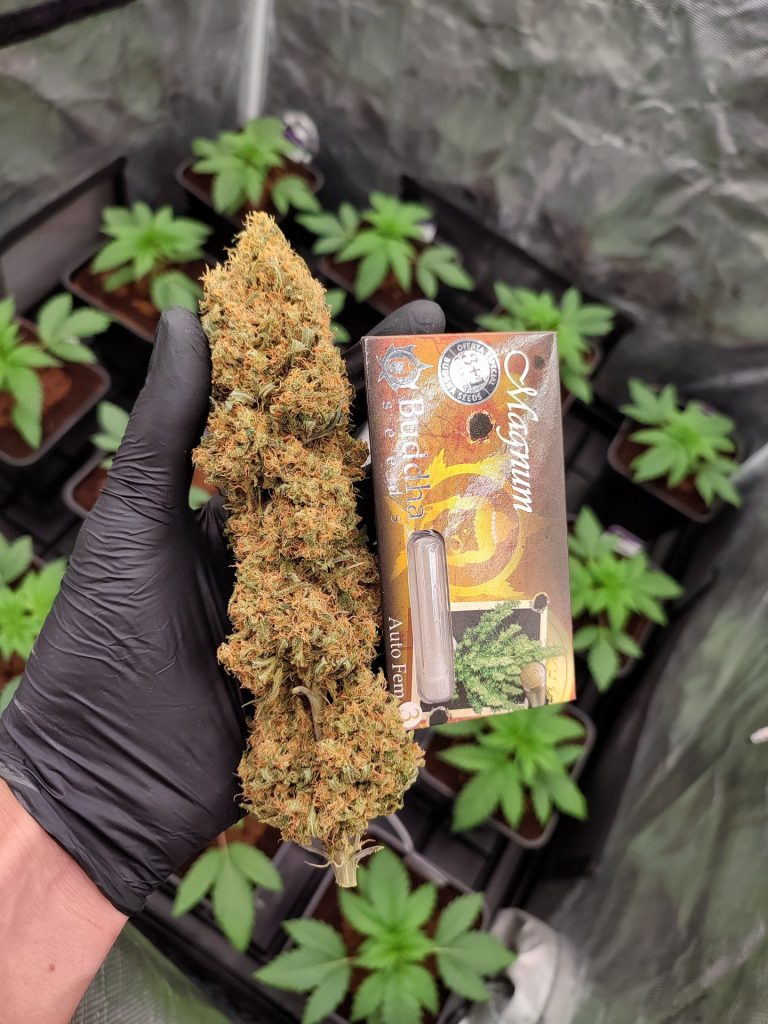
  • 11–18 litres is ideal.
  • Larger volume = higher yield.

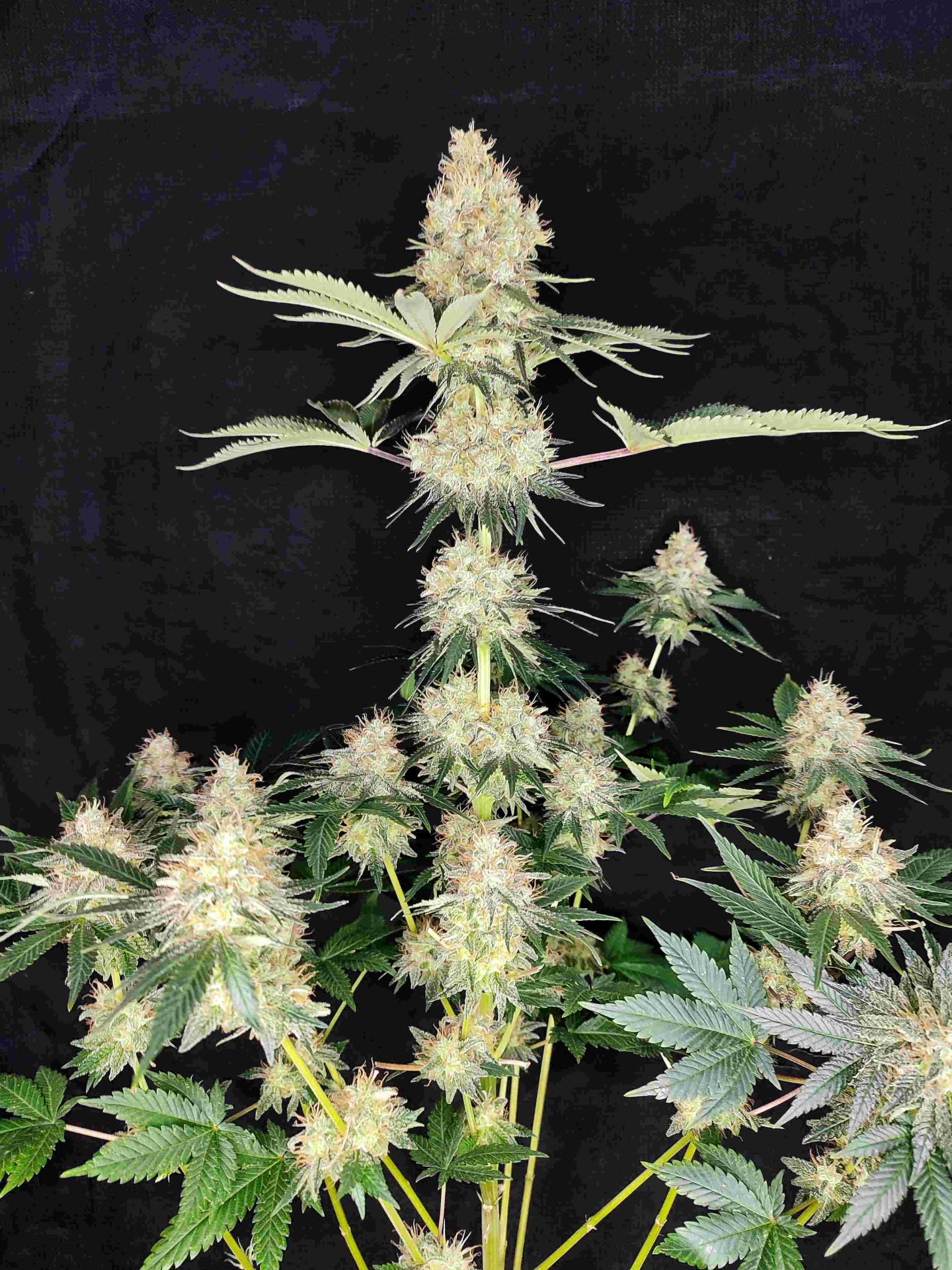
Magnum autofloreciente Buddha Seeds marihuana productiva cogollos marihuana cómo cultivar automáticas en indoor

Common germination mistakes

  • Burying the seed too deep → hinders emergence.
  • Excess water → rot.
  • Transplanting → reduces production and slows growth.
  • Cold temperatures → slow or failed germination.

How to grow autoflowering plants indoors. Growth phase (Weeks 1–3)

Once the seedling emerges, the growth stage begins. This is when the final structure is defined, so it is essential that our autoflowering cannabis plant develops in optimal environmental conditions.

LED lighting during growth

  • Recommended photoperiod: 18/6 (or 20/4 to maximise production).
  • LED set to:
    • 40–60 cm distance
    • Gentle intensity at first to avoid burns
  • Recommended PPFD: 300–450 µmol/m²/s

Environmental parameters

  • Temperature: 22–26°C
  • Humidity: 60–70%
  • Irrigation pH: 6.2
  • EC: 0.6–0.9
  • Irrigation: small and frequent amounts

Nutrients for autoflowering plants during growth

  • Rooting agent until day 10.
  • Mild growth fertiliser (low in nitrogen).
  • Add calcium + magnesium if you use LED.

Recommended grow tent

  • 60×60 cm → 1–2 plants
  • 80×80 cm → 2–4 plants
  • 100×100 cm → 4–6 plants
  • 120×120 cm → 6–9 plants

Mylar reflective interior and good ventilation are essential.

Common mistakes when growing autoflowering plants indoors

  • Overwatering → weak roots.
  • Raising the LED too high → stretching.
  • Excess nitrogen → very green leaves and slow growth.
  • Small pot → reduces final yield.

How to grow autoflowering plants indoors. Flowering phase (Weeks 3–10)

This is where autoflowers show their potential. Learning how to grow autoflowers indoors during flowering requires careful control of light, ventilation and humidity to prevent mould.

LED lighting during flowering

  • Maintain 18/6 or 20/4 (autoflowers do not need 12/12).
  • LED at 30–40 cm depending on power.
  • Target PPFD: 600–900 µmol/m²/s.

Environmental conditions

  • Temperature: 22–24°C
  • Humidity: 45–55%
  • Watering: more abundant but without waterlogging
  • pH: 6.3–6.5
  • EC: 1.2–1.6

Fertilisation of autoflowering plants during flowering

  • Basic flowering fertiliser.
  • Progressive PK in weeks 5–7.
  • Micronutrients to maximise resin.
  • Avoid excess nitrogen, as it slows down flowering.

Ventilation and odour control

  • Extractor with carbon filter.
  • Oscillating fan 24/7.
  • Air renewal every 1–2 minutes.

Common mistakes during flowering

  • High humidity → botrytis.
  • LED too close → burns and foxtails.
  • Excess PK → nutrient lockout.
  • Not controlling night-time temperature → airy buds.

Harvesting autoflowers: when to cut

Knowing when to cut an autoflowering plant is key to mastering how to grow autoflowers indoors.

Harvest indicators

Pistils:

  • 70–90% brown and retracted → good time.

Trichomes:

  • Most milky → maximum THC.
  • 10–30% amber → more powerful and longer-lasting effect.
  • Transparent → too early.

Root washing

  • 7–10 days before cutting → only adjusted water.

Common harvesting mistakes

  • Cutting by days rather than actual maturity.
  • Confusing new foxtails with lack of maturity.
  • Harvesting with transparent trichomes → weak buds.

Maximum yield of an autoflowering strain indoors

One of the best reasons to learn how to grow autoflowering strains indoors is their productivity under LED lighting. Today, the best autoflowering strains can match many photoperiod strains.
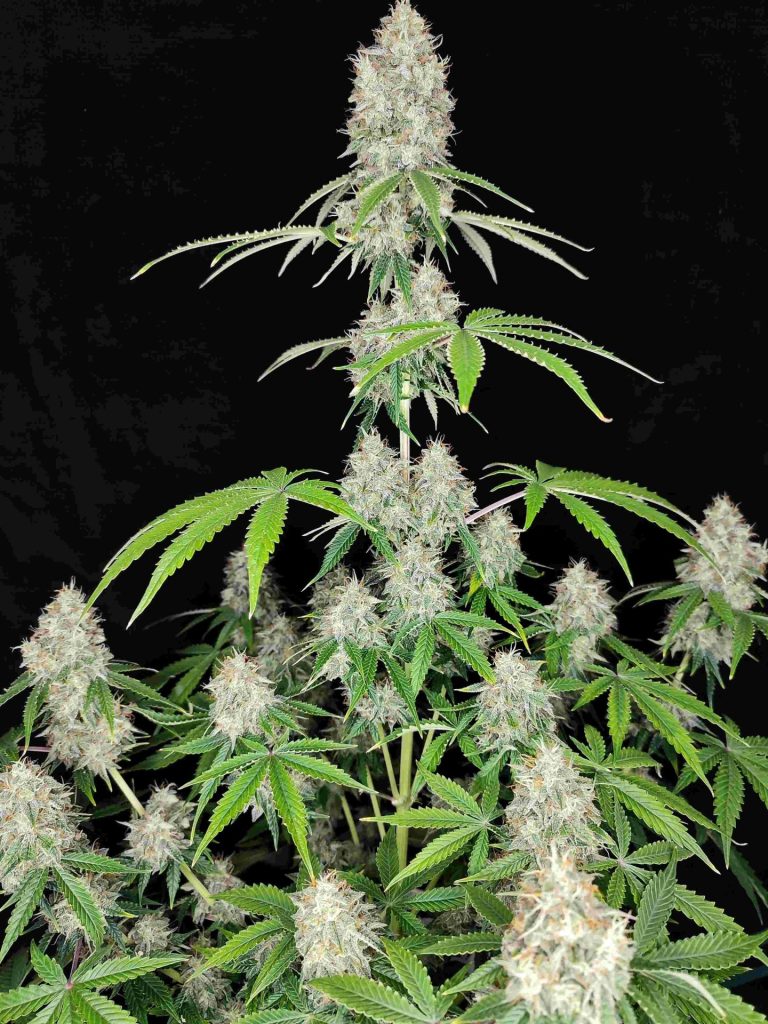
Average yield

  • 350–550 g/m²

High yield (quality LED + optimal conditions)

  • 550–650 g/m²
  • 60–150 g per plant depending on genetics and pot size

Examples of highly productive autoflowering plants indoors

Magnum

  • Up to 550–600 g/m²
  • 80–150 g per plant
  • Extreme branching and explosive vigour

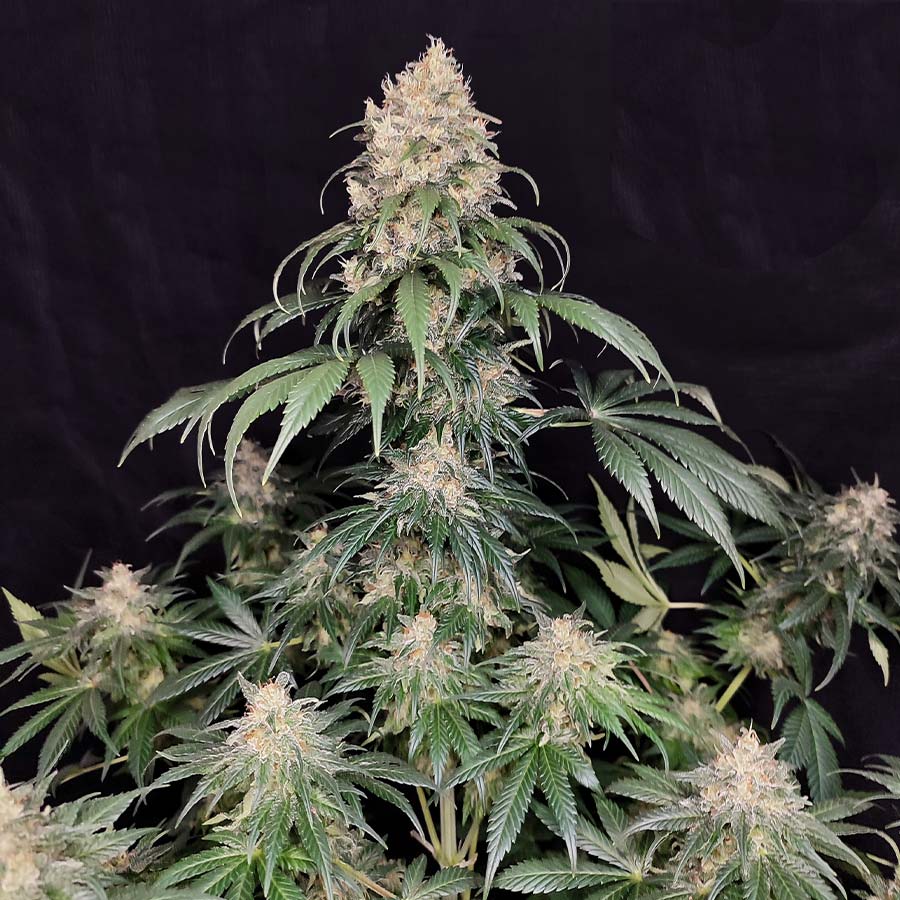
Magnum automatica Buddha Seeds como cultivar automáticas en indoor

Deimos

  • 450–500 g/m²
  • 60–100 g per plant
  • Dense buds with Indica dominance

Buddha Auto Critical

  • 500–550 g/m²
  • 50–120 g per plant
  • Aromatic, fast and very stable

Buddha Auto White Widow

  • 450–550 g/m²
  • 60–110 g per plant
  • Abundant resin, ideal for extraction

These four varieties are perfect examples of autos that produce massive yields in small spaces when you know how to grow autos indoors correctly.

What are you waiting for?

Share:
logo buddha seeds

Age verification

To enter our website you must be over 18 years old.

DON'T GO YET, WE HAVE SOMETHING FOR YOU

Get a 10% discount coupon

Valid only for Europe