Shipments throughout the EU. Get a free grinder with all your orders.
Purple cannabis has become one of the most striking trends in the world of cannabis. Its violet or bluish tones, exotic appearance, and mysterious aura have made many growers and consumers want to know more about it. But what is behind its color? In this article, we will look at:
Below, we explain everything you need to know about purple cannabis.
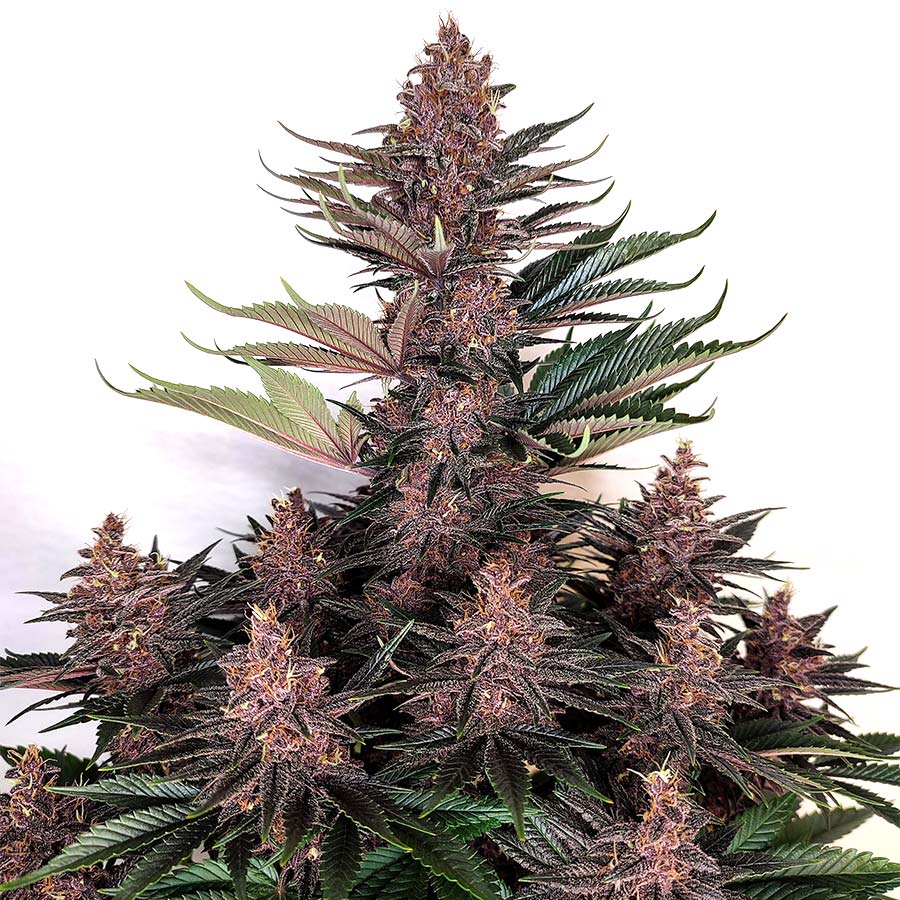
The purple color of some cannabis plants is due to the presence of anthocyanins, natural pigments that are also found in fruits such as blueberries and blackberries.
These molecules change color depending on the pH of the environment and environmental conditions:
In short, purple marijuana is not a mutation or a rarity, but a natural response of certain genetics to the environment.
This is one of the most widespread myths. Contrary to popular belief, color does not determine the potency of marijuana. The concentration of THC, CBD, and terpenes depends on genetics and cultivation, not pigmentation.
However, anthocyanins—responsible for the purple color—do have antioxidant and anti-inflammatory properties, which could provide added wellness benefits in medicinal varieties.
Therefore, even though a purple flower may not be stronger in THC, it may have a different aromatic or therapeutic profile that is highly appreciated by consumers.
If your plant has the genetics to produce anthocyanins, you can encourage the appearance of color with a few simple steps:
Pro tip: Not all strains will turn purple, even if you follow all the steps. If the genetics don’t allow it, you’ll only weaken the plant.
Buddha Purple Kush is perhaps Buddha Seeds’ most renowned strain, with a vibrant purple color that is one of its main attractions. Its effect is deeply relaxing. With dense, resinous buds, Buddha Purple Kush has a short growing cycle and is remarkably resistant. Its earthy notes are mixed with sweet and fruity nuances.
Best of all, you can enjoy this purple cannabis strain in both autoflowering and feminized versions. Its genetics tend towards Indica dominance, with a tendency towards marked purple tones if conditions are right.
Valid only for Europe